
Most people use “EMT” as a catch-all term for anyone responding to a medical emergency in an ambulance, but the field actually has three distinct certification tiers with meaningfully different training requirements and pay: EMT-Basic, Advanced EMT, and Paramedic. Each tier expands what interventions you’re legally authorized to perform, and each comes with a real, measurable jump in typical compensation. Understanding this ladder — and which rung a specific job posting actually refers to — matters more here than in most healthcare fields, since online salary searches routinely blur these distinct roles together.
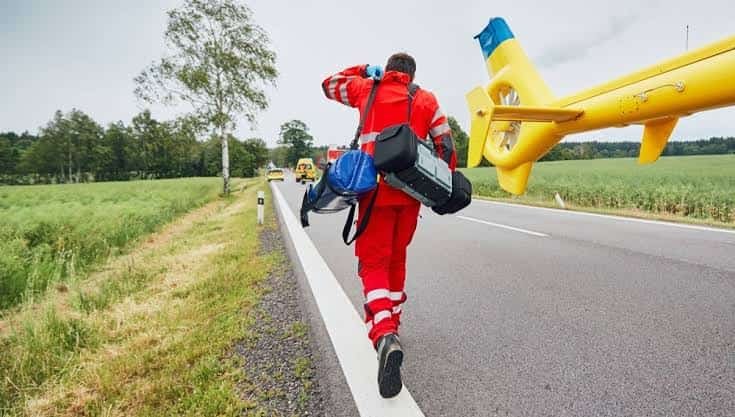
EMT and Paramedic Salary Overview
| Metric | Figure |
| EMT-Basic median annual wage | $41,340 |
| Paramedic median annual wage | $58,410 |
| Advanced EMT (AEMT) typical range | ~$38,000–$56,000 |
| EMT lowest 10 percent | Under $31,410 |
| Paramedic highest 10 percent | Over $82,420 |
| Total employed (EMTs and paramedics combined) | ~288,580 |
| Projected job growth (2024–2034) | 5% (faster than average) |
| Annual job openings projected | ~19,000 |
Figures reflect the U.S. Bureau of Labor Statistics Occupational Employment and Wage Statistics program, May 2024, the most recent official release available.
Understanding the Three-Tier Certification Ladder
EMT-Basic represents the entry point into emergency medical services, requiring a relatively short certification course covering basic life support skills — CPR, bleeding control, splinting, and basic patient assessment. This is the most accessible tier to enter, often completed in a matter of weeks, but it also carries the most limited scope of practice and correspondingly modest pay.
Advanced EMT sits in the middle of the ladder, expanding on basic EMT skills with limited advanced interventions — IV therapy, a broader approved medication list, and supraglottic airway devices — without requiring the full scope of training a paramedic completes. AEMT represents a genuine middle-ground option for those wanting more clinical authority than basic EMT certification allows, without committing to the considerably longer paramedic training pathway.
Paramedic is the most advanced pre-hospital certification, typically requiring an accredited associate degree program along with substantial clinical and field internship hours. Paramedics can perform advanced interventions — cardiac medication administration, advanced airway management, and more complex clinical decision-making — that EMTs and AEMTs aren’t authorized to provide, and this expanded scope translates directly into meaningfully higher pay.
Why the Fire-Based vs. Third-Service EMS Model Matters for Pay
EMS pay varies considerably not just by certification level but by how a given region structures its emergency medical services. Some areas operate EMS through the local fire department, meaning EMTs and paramedics function essentially as cross-trained firefighter-medics, often accessing fire department pay scales, pension systems, and benefits. Other regions use a “third service” model — an EMS agency operating independently from both fire and police departments — or contract with private ambulance companies. These different structural models can produce meaningfully different pay and benefits for functionally similar clinical work, making it worth researching how EMS is organized in any specific region before comparing salary offers across different areas.
What Actually Determines Where You Land in the Pay Range
Moving up the certification ladder remains the single most direct way to increase pay in this field. The jump from EMT-Basic to paramedic represents one of the larger percentage pay increases available through additional training in emergency healthcare, making the decision to pursue paramedic certification one of the more consequential career choices in EMS.
Specialized roles built on top of paramedic certification command a further premium. Flight paramedics, who provide critical care during helicopter or fixed-wing medical transport, report considerably higher pay than ground-based paramedics, reflecting both the additional specialized training and the higher-stakes nature of critical care transport work.
Setting creates real variation beyond the fire-based versus third-service distinction. Hospital-based EMS positions, private ambulance companies, and municipal EMS agencies each carry somewhat different pay structures and benefit packages, worth comparing directly rather than assuming similar titles carry similar total compensation.
Overtime is common and meaningfully affects real take-home pay in this field. Given EMS staffing patterns and 24-hour coverage needs, many EMTs and paramedics regularly work overtime, which can push actual annual earnings above the base salary figures that BLS wage data captures.
Supervisory and instructor roles offer a path beyond direct field work. EMTs and paramedics who move into supervisory positions, dispatch roles, or become certified EMS instructors typically access somewhat different, sometimes more predictable compensation structures than direct ambulance response work.
Why This Field Carries Genuine Physical Risk Worth Acknowledging
It’s worth being direct about something that shapes this profession beyond compensation: EMS work involves significant physical risk, including high rates of on-the-job injuries related to patient lifting, exposure to communicable illness, and the inherent hazards of working in and around emergency vehicles. This reality is part of why the field, even at the paramedic level, doesn’t always command pay proportional to the physical and clinical demands involved, and it’s a genuine consideration for anyone weighing this career path beyond the salary figures alone.
Is Pursuing Paramedic Certification Worth the Additional Training Investment?
Given how significantly paramedic pay outpaces EMT-Basic pay, and considering that paramedic training, while more extensive than EMT certification, still represents a considerably shorter and less expensive path than most other advanced clinical healthcare credentials, pursuing paramedic certification is generally a strong investment for anyone planning to stay in EMS long-term. The clearest financial case for stopping at EMT-Basic or AEMT applies mainly to those using EMS work as a stepping stone toward nursing, PA, or medical school, where the clinical experience matters more than maximizing EMS-specific pay along the way.
FAQs
Q1. Is it worth pursuing AEMT certification, or should I go straight for full paramedic training if I’m serious about EMS as a career?
If you’re committed to a long-term EMS career, going directly for paramedic training is usually the stronger financial move, given how much more paramedic pay typically outpaces both EMT-Basic and AEMT compensation. AEMT makes more sense as a genuine middle step for those wanting expanded clinical authority without yet committing to the full time investment paramedic training requires, or those using EMS as a bridge toward other healthcare careers.
Q2. Does working for a fire department pay more than a private ambulance company for the same EMT or paramedic certification?
It often does, particularly when fire department positions include access to fire department pension systems and benefit structures, though this varies considerably by region and the specific EMS model used locally. It’s worth researching how EMS is structured in your specific target area, since fire-based, third-service, and private ambulance models can produce meaningfully different total compensation for similar clinical work.
Q3. Is flight paramedic work worth pursuing given the additional training and risk involved?
For paramedics drawn specifically to critical care transport work, flight paramedic positions do offer meaningfully higher pay than ground-based paramedic roles, reflecting the additional specialized training and higher-acuity patient population involved. It’s a legitimate specialization path worth pursuing for those genuinely interested in critical care transport, though it typically requires significant ground paramedic experience first before qualifying for these positions.
Q4. Should I use EMT work as a stepping stone toward nursing or medical school, or commit to it as a long-term career?
Both are legitimate paths — many people use EMT or paramedic experience specifically to gain hands-on clinical exposure before pursuing nursing, PA, or medical school, while others build genuinely long-term, rewarding EMS careers by advancing to paramedic certification and eventually into supervisory or specialized roles. Given the field’s pay ceiling relative to other healthcare careers, it’s worth being intentional early about which path fits your longer-term goals.