
Few entry-level healthcare careers offer as fast a path to a paycheck as phlebotomy — most training programs run four to eight months, not years. And California happens to be the single highest-paying state in the country for the role, a distinction that isn’t just about cost of living. It comes down to a licensing requirement most other states don’t bother with.
Here’s what phlebotomists actually earn across California, and why the state’s stricter entry bar is part of the reason the pay sits where it does.
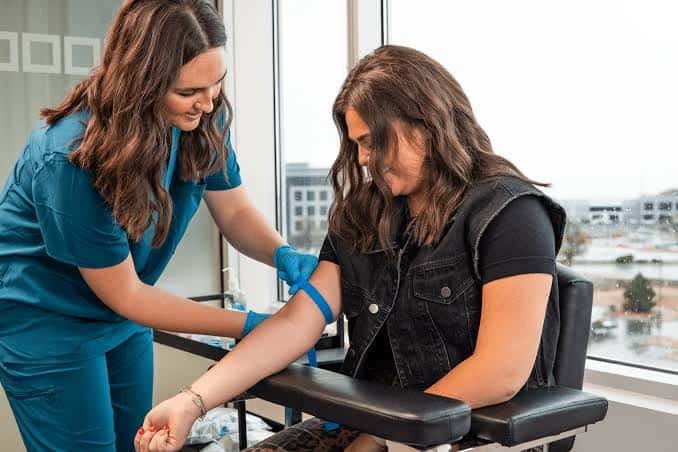
California Phlebotomist Salary Overview
| Metric | Figure |
| California median annual wage | ~$50,090 |
| California median hourly wage | ~$24.08 |
| National median (for comparison) | $43,660 |
| National employed phlebotomists | ~139,700 |
| National projected job growth (2024–2034) | 6% (faster than average) |
| Annual job openings projected (national) | ~18,400 |
| Typical entry-level education | Postsecondary phlebotomy certificate (4–8 months) |
| California-specific requirement | State CPT license (CDPH), unlike most states |
Figures reflect Bureau of Labor Statistics Occupational Employment and Wage Statistics data, with California-specific figures drawn from the most recent available state release.
The Licensing Rule That Sets California Apart
Most states let phlebotomists work with just a national certification — from organizations like the NHA or ASCP — and a completed training program. California is one of only a handful of states that goes further, requiring its own state-issued Certified Phlebotomy Technician license through the California Department of Public Health, on top of whatever national certification a candidate holds. There are two tiers: CPT-1, which covers skin puncture and venous draws, and CPT-2, which adds arterial blood draws to the scope of practice.
This extra layer of state licensing does two things. It raises the bar to enter the field, which constrains the supply of eligible workers relative to demand. And it signals to employers a baseline of verified competency that a purely national certification doesn’t guarantee on its own. Both effects show up directly in the paycheck — California’s median consistently ranks at or near the top nationally for this occupation.
Why California Pays More, Beyond Just the License
Cost of living plays the most obvious role. California’s housing and general living costs sit well above the national average, and wages across nearly every entry-level healthcare occupation reflect that pressure, phlebotomy included.
The sheer size and density of California’s healthcare system matters too. Major hospital systems, diagnostic labs, and blood donor centers operate at a scale most states don’t match, creating steady demand for phlebotomy staff across a wide range of settings, from Kaiser Permanente and Sutter Health facilities to independent diagnostic labs like Quest and LabCorp.
Certification stacking pays off here as much as anywhere. Phlebotomists who hold both the state CPT license and a national certification, or who add skills like EKG or pediatric draw competency, tend to command pay toward the higher end of the range rather than the entry point.
Where in California You Work Changes the Number Significantly
The Bay Area sits at the top of the state’s pay scale, reflecting both the region’s high cost of living and its concentration of major hospital systems and biotech and diagnostic lab employers.
Los Angeles lands in the middle of California’s range — meaningfully above the national median, but below the Bay Area’s premium, with a large and varied job market spanning hospitals, outpatient labs, and blood donor centers.
The Inland Empire and Central Valley pay less than coastal metros, but the trade-off in cost of living is substantial enough that many phlebotomists find the lower paycheck stretches just as far, sometimes further, than a higher salary in a pricier coastal city.
What Actually Moves Your Pay Within the Field
Experience matters, though the ceiling is lower than in many healthcare roles. Entry-level phlebotomists typically start well below the state median, while those with several years of experience and a strong track record can approach or exceed it, particularly at hospitals or specialized diagnostic labs.
Work setting creates a real split. Outpatient care centers and specialized diagnostic laboratories generally pay more than physician’s offices, while hospital positions often add shift differentials for nights, weekends, and holidays that meaningfully boost effective hourly pay.
Phlebotomy is frequently a stepping stone, not a final destination. Many phlebotomists use the role to gain clinical experience while pursuing further credentials — clinical laboratory technician, medical assistant, or nursing programs — since the hands-on patient contact and lab environment translate well into those next steps.
Is Phlebotomy a Smart Entry Point Into California Healthcare?
Given the short training timeline and relatively low upfront cost compared to most healthcare careers, phlebotomy remains one of the more accessible ways into the field. The trade-off is a lower pay ceiling than many other allied health roles — a phlebotomist’s top earners still fall meaningfully below what a radiologic technologist or registered nurse can eventually reach. For many, that’s an acceptable trade for speed of entry, and a real number of phlebotomists use the role specifically to build experience before advancing into higher-paying clinical positions.
FAQs
Q1. Do I need both a national certification and the California state CPT license to work as a phlebotomist here?
Yes — California requires the state-issued CPT license regardless of whether you also hold a national certification like the NHA’s CPT credential. Most training programs are structured to prepare you for both, but it’s worth confirming with your specific program that it meets California’s state licensing requirements before enrolling.
Q2. Is CPT-2 certification worth pursuing over CPT-1 if I’m just starting out?
It depends on where you want to work. CPT-2, which adds arterial blood draws to your scope of practice, opens doors to certain hospital and specialty lab positions that CPT-1 alone doesn’t qualify you for, and it can support somewhat higher pay. For phlebotomists planning to work primarily in outpatient labs or blood donor centers, CPT-1 is often sufficient.
Q3. Does working night or weekend shifts in a California hospital meaningfully change take-home pay for phlebotomists?
Yes, more than the base hourly rate suggests. Hospital-based phlebotomy positions commonly include shift differentials for nights, weekends, and holidays, and since blood draws often need to happen very early in the morning before patients eat, phlebotomists willing to work these less popular shifts frequently see a real boost to their effective annual income.
Q4. Is it better to start in a hospital or an outpatient lab as a new phlebotomist in California?
Outpatient labs and diagnostic centers often pay somewhat more on average, but hospitals typically offer more structured training, clearer paths to shift differentials, and better internal advancement opportunities into other clinical roles. For someone using phlebotomy as a stepping stone toward further healthcare training, the hospital setting’s structure and exposure can be worth more than the immediate pay difference.